Enhancing Open Democracy: The Role of Intelligent Communications in Council Chambers
Written by Kieron Seth, Product Marketing Director at Lumens
August 27, 2026 2332
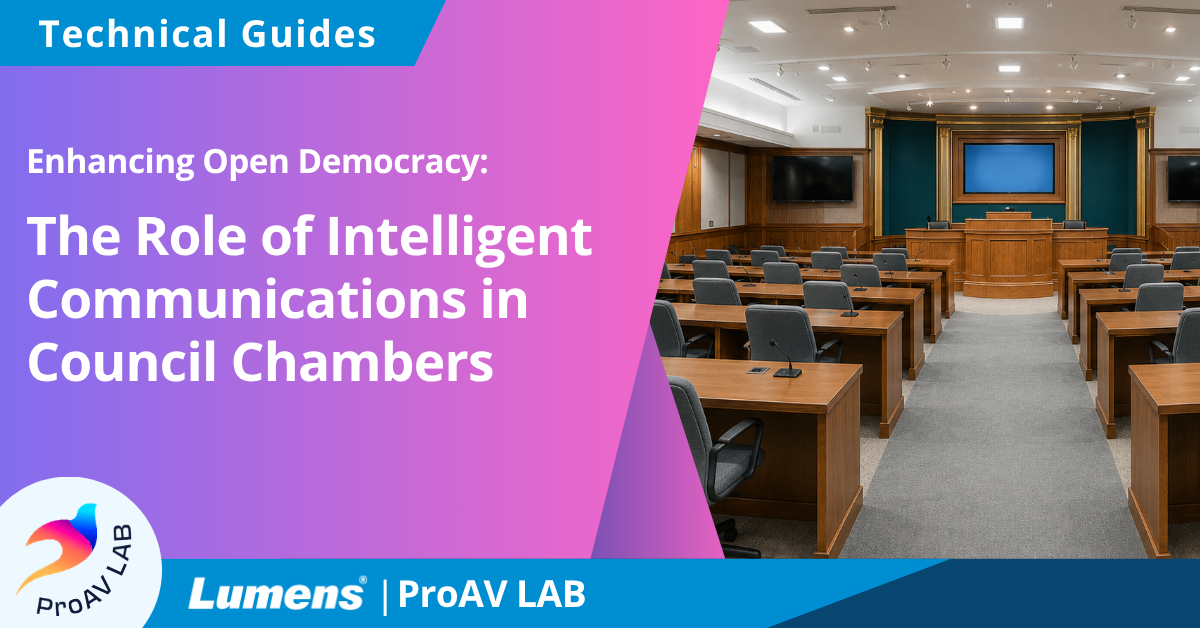
Open government, championed by organizations such as the OGP, is now a cornerstone of local government. Increasingly, local councils and district authorities are expected not only to make decisions in the public interest, but also to demonstrate clearly how and why those decisions are made, and in some instances, enabling citizens to be part of the process. This is a global phenomenon, witnessed in places as geographically diverse as India, the USA and the EU. Civic participation and civic engagement are terms that are re-shaping how democracies function.
In practice, this means ensuring that council meetings are visible, understandable, and inclusive for citizens, whether they are physically present in the chamber or following proceedings remotely. A 2026 report to one local council in the north of England sums up the ambition:
“In the interest of transparency and openness, the council should ensure that its public meetings, which includes Committee Meeting’s, Cabinet and Full Council should be fully recorded and where possible live streamed to allow our residents to fully engage in local democracy.”

In recent years, and especially since the pandemic, expectations around transparency have evolved. Citizens now expect to watch meetings live online, access recordings on demand, and clearly see which elected representatives are speaking at any given moment. Additionally, there is a growing demand for contributors to be able to interact with, give evidence to and question government officials using publicly available video conferencing platforms, such as Teams and Zoom.
This shift has placed new demands on council chamber technology. Traditional setups, often reliant on manual processes and fragmented systems, are no longer sufficient to meet these expectations efficiently or cost-effectively.
This is where intelligent council chamber communications come into play—bringing together automation, audiovisual integration, and AI-powered systems to transform how local democracy is delivered.
- 1. The Challenges of Traditional Council Chamber Setups
- 2. A New Approach to Civic Engagement: Intelligent, Integrated Systems
- 3. How AI Voice Tracking Transforms Meetings
- 4. High-Quality Video and Audio: Essential for Transparency
- 5. Reducing Costs While Improving Outcomes
- 6. Supporting Modern Democratic Engagement
- 7. A Scalable, Future-Ready Solution
- 8. Strengthening Democracy Through Technology
- 9. Conclusion
▶ 1. The Challenges of Traditional Council Chamber Setups

Historically, council chambers have relied on a mix of manual operations and disconnected technology. While functional, these systems come with crucial drawbacks.
1. Manual operation often requires dedicated staff to control cameras, audio, and switching during meetings. This increases staffing and training costs and introduces the risk of human error during live proceedings.
2. Legacy systems frequently depend on complex cabling and hardware setups, based on HDMI cables, adapters, converters, and separate audio wiring. These installations can be cumbersome, difficult to maintain, and expensive to upgrade.
3. Integrating multiple components—such as video conferencing, live streaming, displays, and archiving—can be technically complex and costly, particularly when using equipment from different vendors.
Together, these challenges limit a council’s ability to deliver a seamless, professional, and transparent viewing experience to the public.
▶2. A New Approach to Civic Engagement: Intelligent, Integrated Systems
Modern IP-based solutions are shifting away from fragmented systems toward unified, intelligent AV platforms. At the centre of this transformation is the concept of an integrated communications system that manages video, audio, streaming, and recording in a coordinated way.
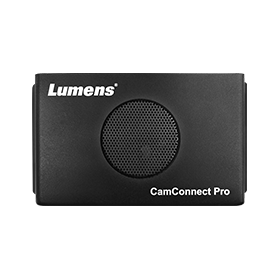
One example is the use of Lumens AI-driven control unit, CamConnect, that acts as the “brain” of the AV solution. This type of system can automate cameras, streamline infrastructure, and significantly reduce operational costs.
At the core of these platforms is AI-powered voice tracking. This technology detects which delegate is speaking in real time and automatically directs cameras to focus on them, switching the live feed accordingly.
This eliminates the need for a camera operator while ensuring that viewers always see the active speaker, just like a professionally produced broadcast.

▶ 3. How AI Voice Tracking Transforms Meetings
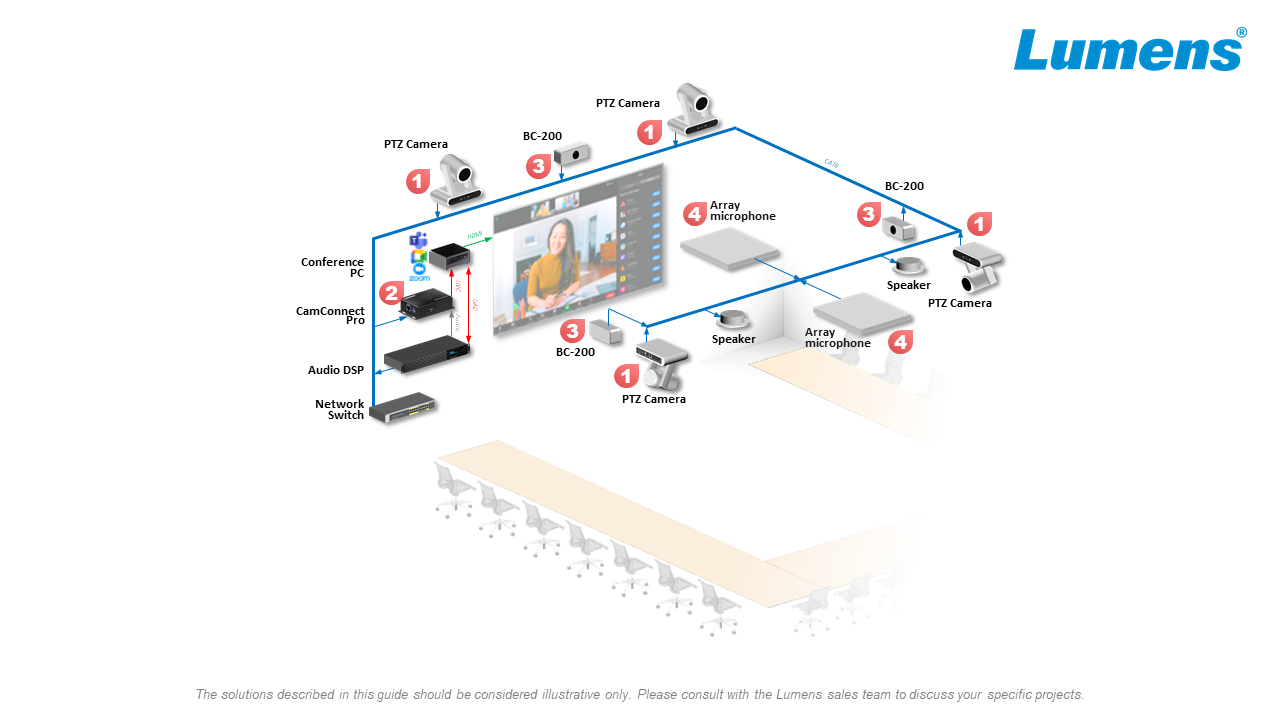
AI voice tracking is a game changer for council chamber communication. Instead of relying on manual switching, the system listens for microphone activation or speech and instantly responds.
The process is remarkably fast:
- A delegate begins speaking
- The system identifies the active microphone or voice
- A camera automatically frames the speaker
- The live feed switches to that view
This level of automation not only improves the viewing experience but also ensures fairness and clarity. Each speaker is clearly shown, reducing confusion for both in-person attendees and remote viewers.
▶ 4. High-Quality Video and Audio: Essential for Transparency

Clear communication is fundamental to open democracy, and that depends heavily on audio and video quality.
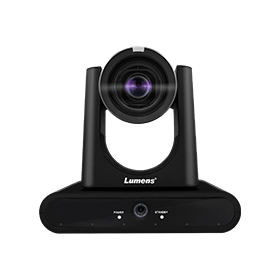
Modern council chamber systems typically incorporate high-definition PTZ (pan-tilt-zoom) cameras with features such as:
- Up to 30x optical zoom for detailed close-ups
- Smooth, silent movement to avoid disruption
- Flexible connectivity for integration with existing systems
Fundamental to the system are professional microphone systems. Gooseneck microphones, commonly used in council chambers, not only capture clear audio but also provide the trigger signals needed for automated camera switching. CamConnect is pre-configured to integrate with systems from leading microphone manufacturers, including Audio-Technica, Shure, Televic and Yamaha.
When these components – cameras, microphones and video switcher - are fully integrated, councils achieve a seamless communication system where audio and video work together intelligently.
▶ 5. Reducing Costs While Improving Outcomes
One of the most compelling advantages of intelligent systems is their cost-effectiveness.
Traditional setups often require:
- Dedicated camera operators
- Complex integration across multiple vendors
- Ongoing maintenance of separate systems
In contrast, an integrated AI-driven platform can:
- Eliminate the need for camera operators entirely
- Manage multiple cameras (typically up-to four) from a single unit
- Replace multiple systems with one unified solution
This consolidation significantly reduces both capital expenditure and ongoing operational costs, making it easier for councils to justify investment in modern technology.
▶ 6. Supporting Modern Democratic Engagement

Beyond improving in-chamber operations, intelligent communication systems expand how councils engage with the public.
● Live Streaming
Meetings can be streamed in real time on platforms such as Vimeo, YouTube or Facebook, allowing residents to follow proceedings from anywhere.
● Remote Participation
Integration with platforms like Microsoft Teams or Zoom enables remote speakers, councillors, or members of the public to join meetings seamlessly.
● Archiving and On-Demand Access
Every meeting can be recorded and stored, creating a searchable public record that citizens and the press can revisit at any time.
Live video can also be displayed on screens within the chamber and public viewing areas, ensuring everyone present has a clear view of proceedings.
These capabilities are essential for modern transparency, enabling councils to reach wider audiences and meet evolving expectations around accessibility.
▶ 7. A Scalable, Future-Ready Solution
Another key advantage of intelligent systems is their scalability. Built on IP-based networks, these solutions can grow alongside a council's needs.
Whether adding more cameras, integrating new streaming platforms, or expanding remote participation, the system can evolve without requiring a complete overhaul. This future-ready approach ensures long-term value and adaptability.
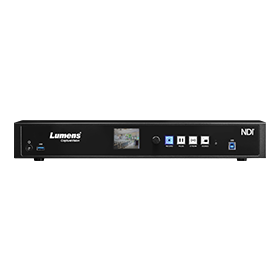
The Lumens portfolio of AV products includes:
- PTZ cameras
- Voice-tracking and auto-switching technology
- Recording and streaming processors
The simplicity of a " one system, one network" model reduces installation time and complexity, allowing councils to deploy solutions more quickly and efficiently.
▶ 8. Strengthening Democracy Through Technology
Ultimately, the goal of investing in council chamber communication technology is not just operational efficiency. It is democratic integrity.
When meetings are clearly visible, professionally presented, and easily accessible:
- Citizens are better informed
- Engagement increases
- Trust in local government is strengthened
Intelligent systems help councils deliver on these goals by removing technical barriers and ensuring consistent, high-quality communication.
▶ 9. Conclusion
Open democracy depends on transparency, accessibility, and accountability. As public expectations continue to rise, local councils must embrace technologies that support these principles effectively.
Intelligent council chamber communication systems represent a significant step forward. By combining AI-driven automation, integrated audiovisual infrastructure, and modern streaming capabilities, they enable councils to deliver professional, transparent, and inclusive meetings—while reducing costs and complexity.
In doing so, they don’t just modernise council chambers—they help bring democracy closer to the people it serves.
Click here Back to Top ↑